Showing posts with label smooth transactions. Show all posts

Wednesday, August 14, 2024

The Costs of Buying a Home


If you have never purchased a home before, there are a lot of things you probably do not know about the process. Beyond finding that home on your favorite real estate app, what does it actually take to go from scrolling through pictures and daydreaming to getting the keys and moving in?

Sales Price

The one thing everyone sees is the sales price - this is probably something you have even used to put a filter on your search. In different markets, this number may be anywhere to close to what the home sells for, or significantly different. The important thing about this number is that it is determined by the seller. Sure, they may have had a listing agent run data from the neighborhood and give advice on that price, but the sales price is always set by the seller. In the last few years, the sales price listed on a property has often been referred to as the "starting offer" as homes can escalate above list price. As things have settled down a bit, that sales price is closer to reality. In the last month (July '24) the average sold price was 102% of the list price, and yet we are still having instances of intense competition - the highest percent over list price for July was 187%.

Financing

Ok, you've found the home of your dreams, how are you going to pay for it? Have you spoken to a lender? Found out what you can borrow? What are the current rates? What kind of programs do they have that may save you money or allow you to move forward?  What amount of money do you have saved up for the downpayment? Do you need a downpayment? There are programs for very low downpayments (and VA loans with $0 downpayment) but of course, as I'm sure you know, the less you borrow, the lower your mortgage payments will be. The lending process can be very convoluted, and talking to an experienced lender who can explain everything to you early on will make a huge difference in your home buying experience. 

Wait, that's not all - You Need More Money

You don't just need a downpayment to purchase a house, you also need to pay the professionals who provide valuable services to you along the way. The Lender, your Agent, the Home Inspector(s), the Title Company, the HOA if there is one, Insurance... oh, and the Government too. Property, Transfer and Recordation taxes owed to the government along with these other services will all depend on where you are purchasing and are based on the value of the home. These fees (minus any inspections - which are paid at the time of service) will add together to make up what is called "Closing Costs" i.e. the money that needs to be brought to the table on closing day when you take ownership of the home. The Lender and your agent can help you to estimate what these costs will be once you have a budget for your dream home. After closing you'll have movers and utilities to set up, and maybe you've decided to do some work to the home before you move in. All things to consider when saving that nest egg.

Your Guide Through It All

Your real estate agent acts as a sort of "GC" for the buying process. An experienced agent will have references for good vendors for lending, for home inspectors, for contractors, for moving, for title work - vendors they have worked with before and trust to do a good job. This knowledge alone is invaluable and can save you time, energy and stress. They can also be your "concierge service" - your first call when you have a question. Even though a real estate agent isn't a lawyer, lender or a home inspector, they will know where to get the answers you need, whatever your questions may be. A good agent is going to get you through the buying process smoothly and educate you with the knowledge you need to make confident decisions. Your agent's compensation is negotiated when you sign the required-by-law buyers agreement - a document that officially hires an agent to work for you as your personal representative and fiduciary.  This document lays out protections for buyers and also for agents, it has a beginning and extendable end date, and it specifies how your agent will be paid for their service.

How much does Agent Representation Cost?

It varies. I can tell you how much I personally charge for my services, but agents are people with varying skills and varying services. There are discount services who will not be all that I described above - they won't be there for your every call and question and you will be on your own to navigate much of the process that lies outside of showings and writing offers. In fact, you can even choose to be on your own to find homes that fit your needs and write an offer completely unrepresented "fill in the blank" style - no guidance, no explanations of what you are signing - if you so choose. The recent lawsuits against various Real Estate Associations were heavily focused on buyer agent fees and transparency. Here in Maryland, we have had buyer representation and buyer agreements that protect buyers and explain representation for decades, but in some areas of the country, they have only just been mandated to start using buyer agreements as a result of the lawsuits. 

Another result of the lawsuit is to make sure that everyone knows that compensation is negotiable. That doesn't mean agents can't dictate what they charge for their services, it just means it's negotiable.  An article came out in the last week that suggested that buyers should not pay more than 2% to their agent and the industry was left wondering where they got that number, what they were considering when coming up with what fair compensation might be for a real estate agent who has worked with a client for multiple years looking for that perfect home. Have they taken into consideration the years of knowledge and experience a buyer might have access to, the monetary benefits of access to vendors who have been vetted for their professionalism and quality of work? What about the value of having someone who will answer your text at 8pm on a Thursday or 2pm on a Sunday to set your mind at ease about some question that just popped into your head? What other business holds these kinds of working hours? I get a daily e-mail from the singular Leonard Steinberg of Compass and today's message had his own opinion on this very article which in return prompted me to write today's blog. Here is a blurb from his e-mail as food for thought. 

"

The Consumer Federation of America -  a non-profit organization founded in 1968 to advance consumer interests through research, education and advocacy - came out with a bold proclamation recently stating that when negotiating compensation with buyer agents, buyers should settle on a dollar amount that pays buyer agents no more than 2% of a home's sale price. Why 2%?

This very well-intentioned organization obviously wishes to bring down home buying costs for the consumer, and who can blame them as wages have not kept up with inflation in areas and the rising costs of everything over the past few decades has driven a big chunk of the US population into further wealth disparity. Could you live off a $20/hour wage before taxes in New York City and pay for health insurance, housing, education, transportation? While baying for 'no more than 2%' buyer commissions, why did they not address the costs agents incur to do business too? Why no limits on those costs? Advertising? Health insurance? Transportation? Technology? Insurance? Legal work? The list goes on. Have they ever promoted a "No more than $_____" for a cab ride? An airplane ticket? A lawsuit? Tips? Are the commissions retail staff get paid disclosed? Surely they have to understand that often the purchase process extends well beyond the obvious, often starting YEARS before a transaction occurs? This narrative perpetuates the myth that agents are paid merely for facilitating a transaction and that ALL that commission lands in their bank accounts without splits, taxes or any expenses. Did they factor all the work agents do that never culminates in a transaction ....or any payment?

Commissions are negotiated. They always have been negotiated. Buyers have always had the option to go it alone. Limiting what you pay someone exists almost nowhere else in the US economy - a free market system - so why real estate buyer brokerage commissions? Many of these organizations promote minimum wages for almost all workers: if they are promoting a maximum of 2%, why not a minimum too? What about all the work many agents do that result in ZERO pay? Shouldn't they promote an hourly pay in the event a buyer does not buy?

I am asking lots of the questions none in the media seem to be asking: one has to wonder why......? 🤔

 "

If you or someone you know is thinking about buying or selling property in Maryland or Northern VA, reach out anytime for a free consultation. 

Monday, March 27, 2023

The Time is NOW!!


Get Ready: The Best Time To List Your House Is Almost Here (or so they say!)


If you’re thinking about selling this spring, it’s time to get moving – the best week to list your house is fast approaching. There are some people plugging numbers into spreadsheets who have decided there is one special week to sell:

Experts at realtor.com looked at seasonal trends from recent years (excluding 2020 as an uncharacteristic year due to the onset of the pandemic) and determined the ideal week to list a house this year:

“Home sellers on the fence waiting for that perfect moment to sell should start preparations, because the best time to list a home in 2023 is approaching quickly. The week of April 16-22 is expected to have the ideal balance of housing market conditions that favor home sellers, more so than any other week in the year.

If you fall into the category of homeowners that believe the spring market is the best market and you’ve been waiting for the best time to sell, this is your chance. If you're like me and think the best time to sell depends heavily on where your house is and how many other homes are on the market, you have got to get a move on! Inventory is still low and THAT is the BEST time, but it is creeping up (albeit slowly). Remember, before you put your house on the market, you’ve got to get it ready. And if you haven’t started that process yet, you’ll need to move quickly. Here’s what you should keep in mind.

Work with an Agent To Determine Which Updates To Make

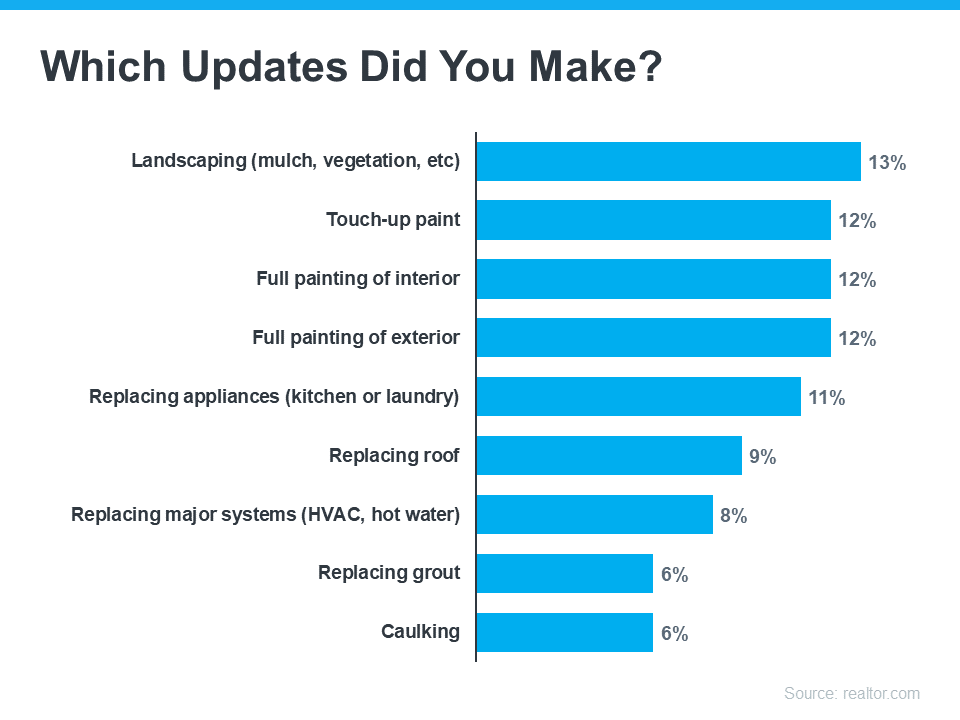
Start by prioritizing which updates you’ll make. In February, realtor.com asked more than 1,200 recent or potential home sellers what updates they ended up making to their house before listing it (see graph below):


As you can see, the most common answers included landscaping and painting. Work with a trusted real estate agent to determine what projects make the most sense for your goals and local market.

If Possible, Plan To Have Your House Staged

Once you’ve made any necessary repairs and updates to your house, consider having it staged. According to the National Association of Realtors (NAR), 82% of buyers’ agents said staging a home made it easier for a buyer to visualize the property as a future home. Additionally, almost half of buyers’ agents said home staging had an effect on most buyers’ view of the home in general. Homes that are staged typically sell faster and for a higher price because they help potential buyers more easily picture their new life in the house.

Bottom Line

Are you ready to sell this spring? Let’s connect to plan your next steps. You can start by making a checklist of what you think your house needs to get ready. Then, we can work together to prioritize your list and move forward together.

Thursday, November 3, 2022

Selling Before the Holidays


Sell Your House Before the Holidays

Sell Your House Before the Holidays | MyKCM

As you look ahead to the winter season, you’re likely making plans and thinking about what you want to achieve before the year ends. One of those key decision points could be whether or not you want to move this year. If the location or size of your current home no longer meets your needs, finding a house that better suits your lifestyle may be a top priority for you. But with today’s cooling housing market, is it really a good time to sell your house, or should you wait?

If you’re ready to make your decision, here are three reasons you may want to consider selling before the holidays.

1. Get One Step Ahead of Other Sellers

Typically, in the residential real estate market, homeowners are less likely to list their houses toward the end of the year. That’s because people get busy around the holidays and deprioritize selling their house until the start of the new year when their schedules and social calendars calm down.

Selling now, while other homeowners may hold off until after the holidays, can help your house stand out. Start the process with a real estate professional today so you can get your house on the market and get ahead of your competition.

2. Get in Front of Serious Buyers This Season

Even though housing supply has increased this year as buyer demand has moderated, it’s still low overall. That means there aren’t enough homes on the market today, especially as the millennial generation reaches their peak homebuying years. As Mark Fleming, Chief Economist at First Americansays:

“While not the frenzy of 2021, the largest living generation, the Millennials, will continue to age into their prime home-buying years, creating a demographic tailwind for the housing market.”

Serious buyers will still be looking this winter and your house may be exactly what they’re searching for. If you work with an agent to list your house now, you’ll be able to get in front of the eager buyers who are hoping to make a move before the year ends.

3. Seize a Great Chance To Move Up

Don’t forget, today’s homeowners have record amounts of equity. According to CoreLogic, the average amount of equity per mortgage holder has climbed to almost $300,000. That’s an all-time high. That means the equity you have in your house right now could cover some, if not all, of a down payment on the home of your dreams.

And as you weigh the reasons to sell before winter, don’t lose sight of why you’re thinking about moving in the first place. Maybe it’s time to buy a house that’s in a better location for you, has the space you and your loved ones have been craving, or simply gives you that sense of home. A trusted real estate advisor can help you determine how much home equity you have and how you can use it to achieve your goal of making a move.

Bottom Line

If you’re thinking about selling your house so you can find a home that better suits your needs, don’t delay your plans. Let’s connect so you can accomplish your goals before winter.

Monday, October 17, 2022

Perspective Matters


Perspective Matters When Selling Your House Today

Perspective Matters When Selling Your House Today | MyKCM

Does the latest news about the housing market have you questioning your plans to sell your house? If so, perspective is key. Here are some of the ways we can explain the shift that’s happening today and why it’s still a sellers’ market even during the cooldown.

Fewer Homes for Sale than Pre-Pandemic

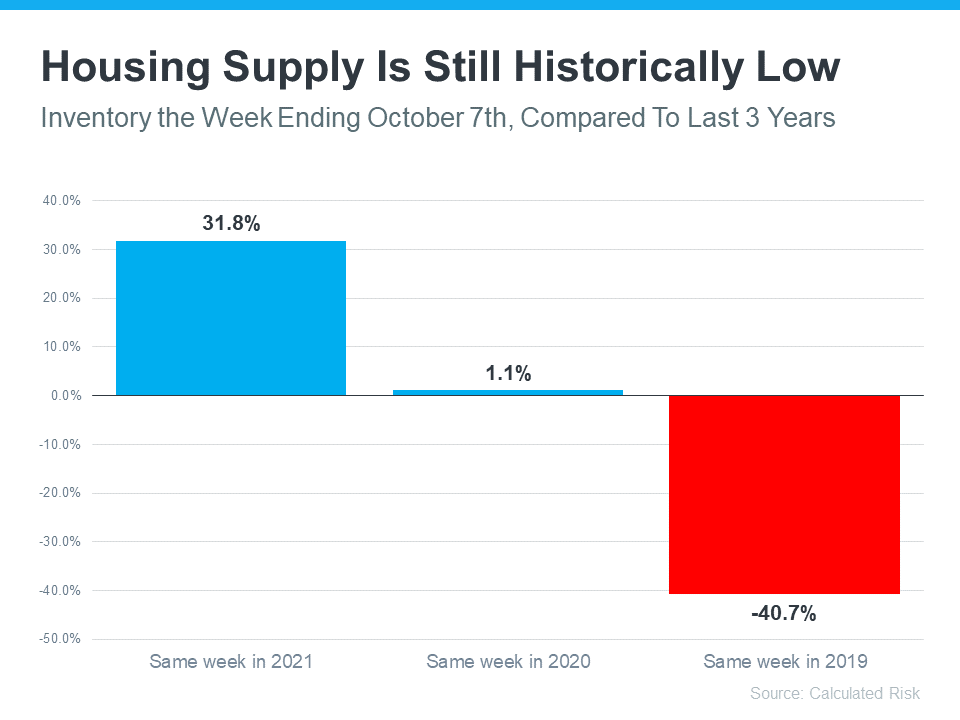
While the supply of homes available for sale has increased this year compared to last, we’re still nowhere near what’s considered a balanced market. (and we are back to supply & demand!!) A recent article from Calculated Risk helps put this year’s increased inventory into context (see graph below):

Perspective Matters When Selling Your House Today | MyKCM

Basically, we have 30% more inventory than last year, 1% more inventory than 2020 and if you go all the way back to 2019, the last normal year in real estate, we’re roughly 40% below the housing supply we had at that time.

Why does this matter to you? When inventory is low, there is still demand for your house because there just aren’t enough homes available for sale. If you are selling your home in this market, there are lots of factors at play, but supply & demand always matters. Managing your perspective is so important now so that you know what to expect. 

Homes Are Still Selling Faster Than More Normal Years

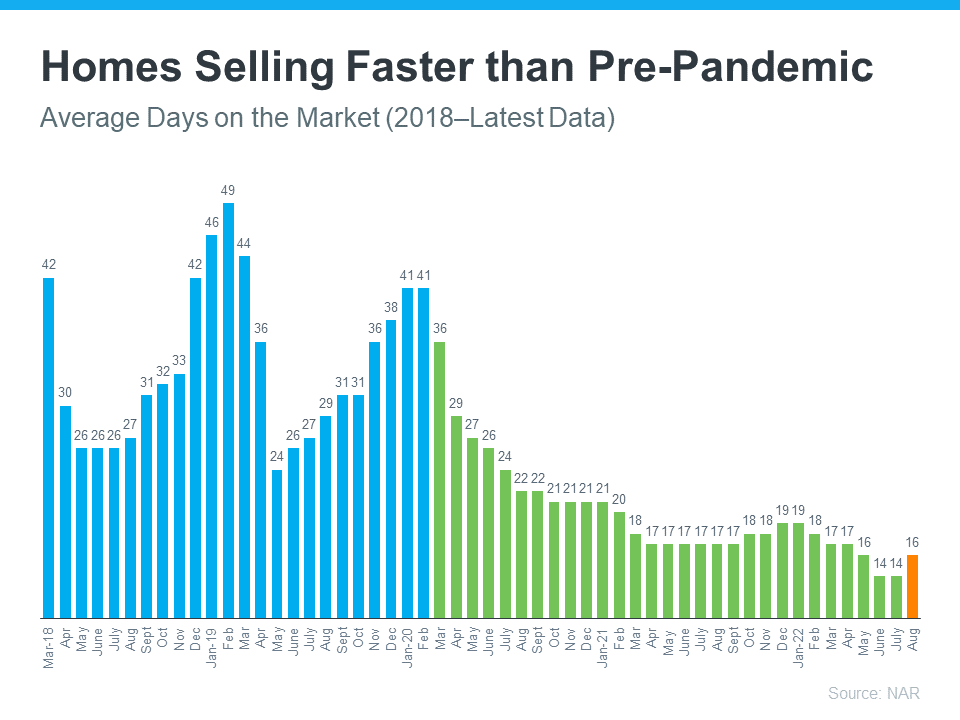
Homes aren’t selling as quickly as they did a few months ago. This is important to know, because just a few months ago, the expectation was to sell in less than a week!! The fact is, the average number of days on the market is still well below pre-pandemic norms – in large part because inventory is still low. The graph below uses data from the Realtors’ Confidence Index by the National Association of Realtors (NAR) to illustrate this trend:

Perspective Matters When Selling Your House Today | MyKCM

As the graph shows, the pre-pandemic numbers (shown in blue) are higher than the numbers we saw during the pandemic (shown in green). That’s because the average days on the market started to decrease as homes sold at record pace during the pandemic. Most recently, due to the cooldown in the housing market, the average days on the market have started to tick back up slightly (shown in orange) but are still far below the pre-pandemic norm.

What does this mean for you? While it may not be as fast as it was a couple of months ago, homes are still selling much faster than they did in more normal, pre-pandemic years. And if you present it well and price it right, your home could still go under contract quickly.

Buyer Demand Has Moderated and Is Now in Line with More Typical Years

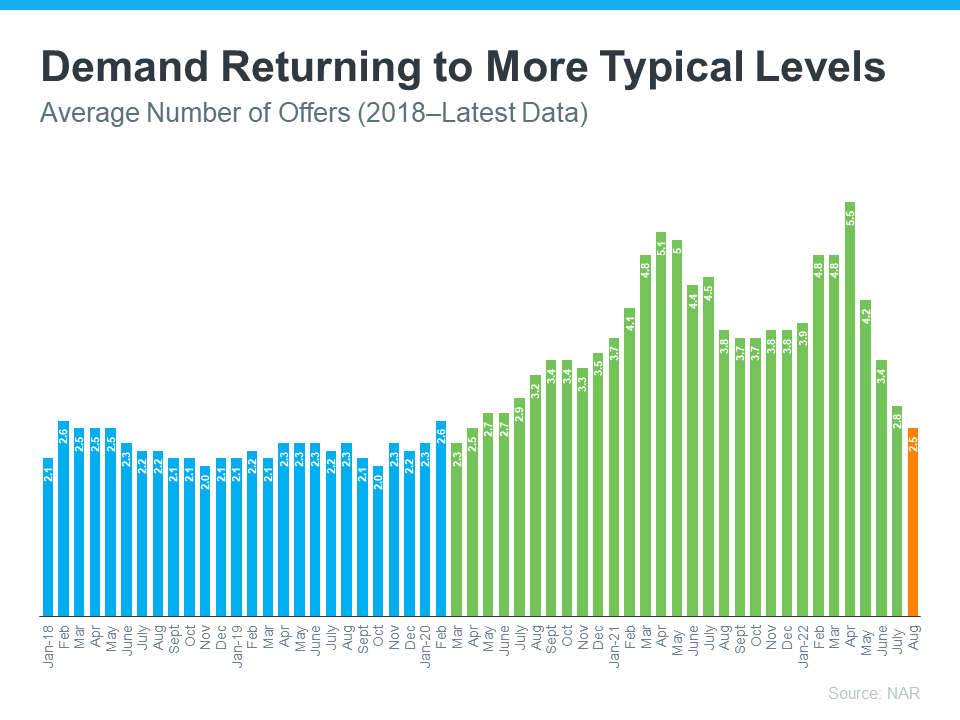
Buyer demand has softened this year in response to rising mortgage rates. But again, perspective is key. Getting 3-5 offers like sellers did during the pandemic isn’t the norm. The graph below uses data from NAR going back to 2018 to help tell the story of this shift over time (see graph below):

Perspective Matters When Selling Your House Today | MyKCM

Prior to the pandemic, it was typical for homes sold to see roughly 2-2.5 offers (shown in blue). As the market heated up during the pandemic, the average number of offers skyrocketed as record-low mortgage rates drove up demand (shown in green). But most recently, the number of offers on homes sold today (shown in orange) has started to return to pre-pandemic levels as the market cools from the frenzy.

What’s the takeaway for you? Buyer demand has moderated from the pandemic peak, but it hasn’t disappeared. The buyers are still out there, and if you price your house at current market value, you’ll still be able sell your house today.

Bottom Line

If you have questions about selling your house in today’s housing market, let’s connect. That way you have context around what’s happening now, so you’re up to date on what you can expect when you’re ready to move.

Thursday, December 30, 2021

Five BIG Mistakes When Buying a Home: Seriously - don't do these!


Key Things To Avoid After You Find the House!

Key Things To Avoid After Applying for a Mortgage | MyKCM

Once you’ve found your dream home, if you aren't buying with cash, your next order of business is securing your mortgage. There are some key things to keep in mind while you are going through this process. It’s exciting to start thinking about moving in and decorating your new place, but before you make any large purchases, move your money around, or make any major life changes, be sure to consult your lender – someone who’s qualified to explain how your financial decisions may impact your home loan.

Here’s a list of things you shouldn’t do after applying for a mortgage. They’re all important to know – or simply just good reminders – for the process.

1. Don’t Deposit Cash into Your Bank Accounts Before Speaking with Your Bank or Lender.

Lenders need to source your money, and cash isn’t easily traceable. Before you deposit any amount of cash into your accounts, discuss the proper way to document your transactions with your loan officer.

2. Don’t Make Any Large Purchases Like a New Car or Furniture for Your Home.

New debt comes with new monthly obligations. New obligations create new qualifications. People with new debt have higher debt-to-income ratios. Since higher ratios make for riskier loans, qualified borrowers may end up no longer qualifying for their mortgage. 

3. Don’t Co-Sign Other Loans for Anyone.

Even if you aren't making any payments yourself, when you co-sign, you’re obligated. With that obligation comes higher debt-to-income ratios as well. Your lender will have to count the payments against you and that will reduce what you qualify for.

4. Don’t Change Bank Accounts.

Remember, lenders need to source and track your assets. That task is much easier when there’s consistency among your accounts. Before you transfer any money, speak with your loan officer.

5. Don’t Apply for New Credit.

It doesn’t matter whether it’s a new credit card or a new car. When you have your credit report run by organizations in multiple financial channels (mortgage, credit card, auto, etc.), your FICO® score will be impacted. Lower credit scores can determine your interest rate and possibly even your eligibility for approval.

6. Don’t Close Any Credit Accounts.

Many buyers believe having less available credit makes them less risky and more likely to be approved. This isn’t true. A major component of your score is your length and depth of credit history (as opposed to just your payment history) and your total usage of credit as a percentage of available credit. Closing accounts has a negative impact on both of those determinants of your score.

Bottom Line

Any blip in income, assets, or credit should be reviewed and executed in a way that ensures your home loan can still be approved. If your job or employment status has changed recently, share that with your lender as well. The best plan is to fully disclose and discuss your intentions with your loan officer before you do anything financial in nature.

If you or someone you know needs real estate services or advice, please reach out, I'd love to help.

Why I Still Think You Should Buy That House, Even Now.

  Invest in Yourself by Owning a Home Are you wondering if it makes sense to buy a home right now? While today’s mortgage rates might seem a...