Showing posts with label expert help. Show all posts

Wednesday, August 14, 2024

The Costs of Buying a Home


If you have never purchased a home before, there are a lot of things you probably do not know about the process. Beyond finding that home on your favorite real estate app, what does it actually take to go from scrolling through pictures and daydreaming to getting the keys and moving in?

Sales Price

The one thing everyone sees is the sales price - this is probably something you have even used to put a filter on your search. In different markets, this number may be anywhere to close to what the home sells for, or significantly different. The important thing about this number is that it is determined by the seller. Sure, they may have had a listing agent run data from the neighborhood and give advice on that price, but the sales price is always set by the seller. In the last few years, the sales price listed on a property has often been referred to as the "starting offer" as homes can escalate above list price. As things have settled down a bit, that sales price is closer to reality. In the last month (July '24) the average sold price was 102% of the list price, and yet we are still having instances of intense competition - the highest percent over list price for July was 187%.

Financing

Ok, you've found the home of your dreams, how are you going to pay for it? Have you spoken to a lender? Found out what you can borrow? What are the current rates? What kind of programs do they have that may save you money or allow you to move forward?  What amount of money do you have saved up for the downpayment? Do you need a downpayment? There are programs for very low downpayments (and VA loans with $0 downpayment) but of course, as I'm sure you know, the less you borrow, the lower your mortgage payments will be. The lending process can be very convoluted, and talking to an experienced lender who can explain everything to you early on will make a huge difference in your home buying experience. 

Wait, that's not all - You Need More Money

You don't just need a downpayment to purchase a house, you also need to pay the professionals who provide valuable services to you along the way. The Lender, your Agent, the Home Inspector(s), the Title Company, the HOA if there is one, Insurance... oh, and the Government too. Property, Transfer and Recordation taxes owed to the government along with these other services will all depend on where you are purchasing and are based on the value of the home. These fees (minus any inspections - which are paid at the time of service) will add together to make up what is called "Closing Costs" i.e. the money that needs to be brought to the table on closing day when you take ownership of the home. The Lender and your agent can help you to estimate what these costs will be once you have a budget for your dream home. After closing you'll have movers and utilities to set up, and maybe you've decided to do some work to the home before you move in. All things to consider when saving that nest egg.

Your Guide Through It All

Your real estate agent acts as a sort of "GC" for the buying process. An experienced agent will have references for good vendors for lending, for home inspectors, for contractors, for moving, for title work - vendors they have worked with before and trust to do a good job. This knowledge alone is invaluable and can save you time, energy and stress. They can also be your "concierge service" - your first call when you have a question. Even though a real estate agent isn't a lawyer, lender or a home inspector, they will know where to get the answers you need, whatever your questions may be. A good agent is going to get you through the buying process smoothly and educate you with the knowledge you need to make confident decisions. Your agent's compensation is negotiated when you sign the required-by-law buyers agreement - a document that officially hires an agent to work for you as your personal representative and fiduciary.  This document lays out protections for buyers and also for agents, it has a beginning and extendable end date, and it specifies how your agent will be paid for their service.

How much does Agent Representation Cost?

It varies. I can tell you how much I personally charge for my services, but agents are people with varying skills and varying services. There are discount services who will not be all that I described above - they won't be there for your every call and question and you will be on your own to navigate much of the process that lies outside of showings and writing offers. In fact, you can even choose to be on your own to find homes that fit your needs and write an offer completely unrepresented "fill in the blank" style - no guidance, no explanations of what you are signing - if you so choose. The recent lawsuits against various Real Estate Associations were heavily focused on buyer agent fees and transparency. Here in Maryland, we have had buyer representation and buyer agreements that protect buyers and explain representation for decades, but in some areas of the country, they have only just been mandated to start using buyer agreements as a result of the lawsuits. 

Another result of the lawsuit is to make sure that everyone knows that compensation is negotiable. That doesn't mean agents can't dictate what they charge for their services, it just means it's negotiable.  An article came out in the last week that suggested that buyers should not pay more than 2% to their agent and the industry was left wondering where they got that number, what they were considering when coming up with what fair compensation might be for a real estate agent who has worked with a client for multiple years looking for that perfect home. Have they taken into consideration the years of knowledge and experience a buyer might have access to, the monetary benefits of access to vendors who have been vetted for their professionalism and quality of work? What about the value of having someone who will answer your text at 8pm on a Thursday or 2pm on a Sunday to set your mind at ease about some question that just popped into your head? What other business holds these kinds of working hours? I get a daily e-mail from the singular Leonard Steinberg of Compass and today's message had his own opinion on this very article which in return prompted me to write today's blog. Here is a blurb from his e-mail as food for thought. 

"

The Consumer Federation of America -  a non-profit organization founded in 1968 to advance consumer interests through research, education and advocacy - came out with a bold proclamation recently stating that when negotiating compensation with buyer agents, buyers should settle on a dollar amount that pays buyer agents no more than 2% of a home's sale price. Why 2%?

This very well-intentioned organization obviously wishes to bring down home buying costs for the consumer, and who can blame them as wages have not kept up with inflation in areas and the rising costs of everything over the past few decades has driven a big chunk of the US population into further wealth disparity. Could you live off a $20/hour wage before taxes in New York City and pay for health insurance, housing, education, transportation? While baying for 'no more than 2%' buyer commissions, why did they not address the costs agents incur to do business too? Why no limits on those costs? Advertising? Health insurance? Transportation? Technology? Insurance? Legal work? The list goes on. Have they ever promoted a "No more than $_____" for a cab ride? An airplane ticket? A lawsuit? Tips? Are the commissions retail staff get paid disclosed? Surely they have to understand that often the purchase process extends well beyond the obvious, often starting YEARS before a transaction occurs? This narrative perpetuates the myth that agents are paid merely for facilitating a transaction and that ALL that commission lands in their bank accounts without splits, taxes or any expenses. Did they factor all the work agents do that never culminates in a transaction ....or any payment?

Commissions are negotiated. They always have been negotiated. Buyers have always had the option to go it alone. Limiting what you pay someone exists almost nowhere else in the US economy - a free market system - so why real estate buyer brokerage commissions? Many of these organizations promote minimum wages for almost all workers: if they are promoting a maximum of 2%, why not a minimum too? What about all the work many agents do that result in ZERO pay? Shouldn't they promote an hourly pay in the event a buyer does not buy?

I am asking lots of the questions none in the media seem to be asking: one has to wonder why......? 🤔

 "

If you or someone you know is thinking about buying or selling property in Maryland or Northern VA, reach out anytime for a free consultation. 

Thursday, January 4, 2024

2024 Homeownership Goals


3 Keys To Hitting Your Homeownership Goals in 2024


If buying or selling a home is your goal for 2024, it’s important to understand today’s housing market, know your why, and work with industry experts to bring your homeownership vision for the new year into focus.

Over the last year, the economy had a big impact on the housing market, and likely on your wallet too. That’s why it’s critical to have a clear picture of not just the market today, but also on what you want out of it when you buy or sell a home. Danielle Hale, Chief Economist at Realtor.comexplains:

The key to making a good decision in this challenging housing market is to be laser focused on what you need now and in the years ahead, so that you can stay in your home long enough that buying is a sound financial decision.

Here are a few things to think through as you define your goals for 2024.

1. Know Your Why

You’re dreaming about making a move for a reason – what is it? No matter what’s happening in the market, there are still many compelling reasons to buy a home today. Your needs may have changed in a way your current house can’t address, or you could be ready to step into homeownership for the first time. Use your why and your motivation as a guidepost in partnership with an expert advisor to make sure your move gives you a lasting sense of accomplishment.

2. Figure Out What Your Next Home Needs To Look Like

You know you want to move, but how would you describe your dream home? The number of homes for sale has grown recently, and that could mean more options to choose from when you buy. But overall housing supply is still lower than more normal years in the market, so you’ll have to work closely with a pro to find what you’re looking for. Just be sure to keep your budget in mind as you balance your wants and needs. The better you understand what’s essential and where you can be flexible, the easier it will be to find a home that’s right for you.

3. Determine if You’re Ready To Buy

Getting clear on your budget and available savings is essential before you get too far into the process. Partnering with a local agent and a lender early is the best way to make sure you’re in a good position to buy. This could include planning how much to save for a down payment, getting pre-approved for a home loan, and assessing your current home equity if you’re selling your existing house.

A Professional Will Guide You Through Every Step of the Process

Buying or selling a home takes expertise to navigate. If that feels a bit overwhelming, that’s normal. Don’t let uncertainty hold you back from your goals this year. A trusted expert will help you bridge that gap and give you the facts and advice you need about today’s housing market.

Bottom Line

Let’s connect to plan how to make your homeownership dreams a reality in 2024.

Monday, September 19, 2022

Selling Your Home in a Cooling Market


Will My House Still Sell in Today’s Market?

Will My House Still Sell in Today’s Market? | MyKCM

If recent headlines about the housing market cooling and buyer demand moderating have you worried you’ve missed your chance to sell, here’s what you need to know. Buyer demand hasn’t disappeared, it’s just eased from the peak intensity we saw over the past two years.

Buyer Demand Then and Now

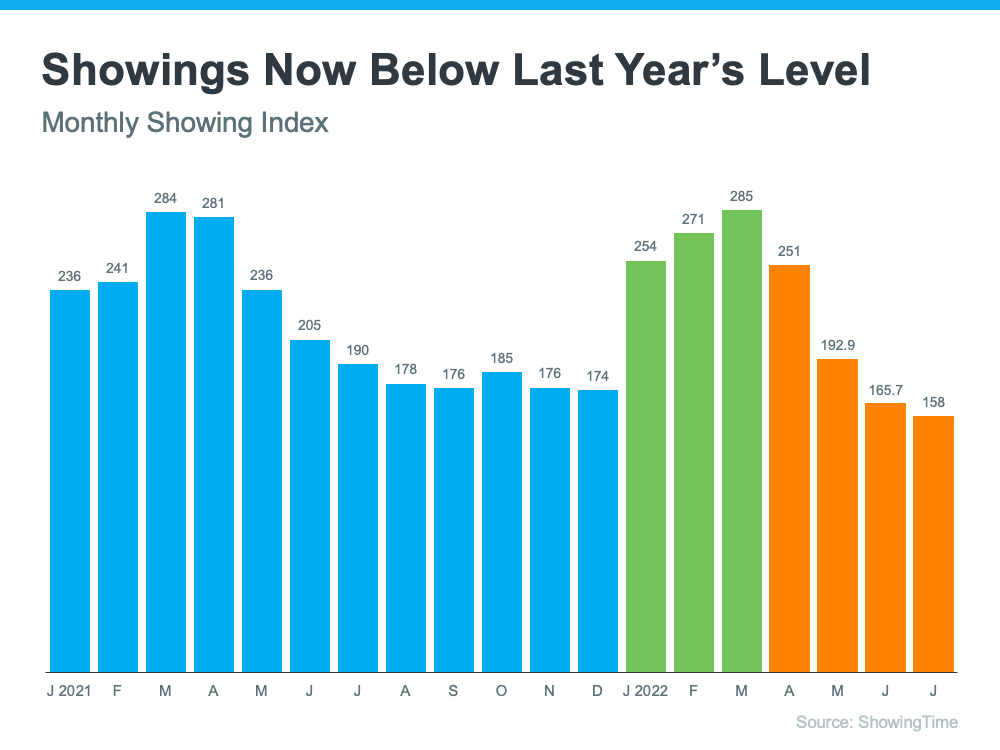
During the pandemic, mortgage rates hit record lows, and that spurred a significant rise in buyer demand. This year, as rates increased due to factors like rising inflation, buyer demand pulled back or softened as a result. The latest data from ShowingTime confirms this trend (see graph below):

Will My House Still Sell in Today’s Market? | MyKCM

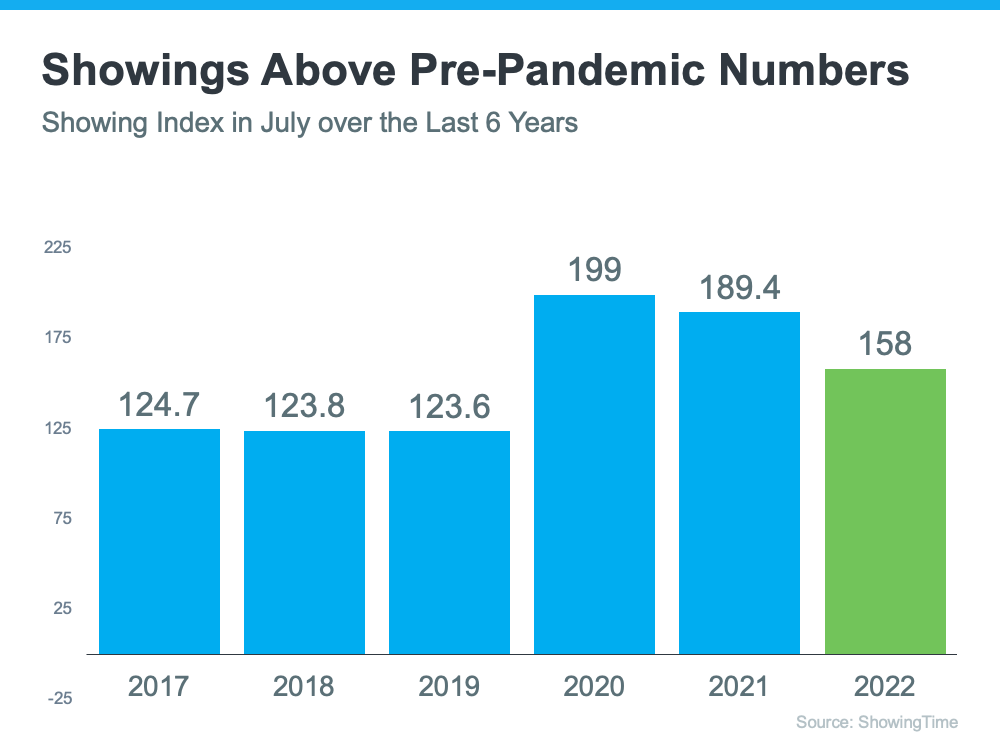
The orange bars in the graph above represent the last few months of data and the clear cooldown in the volume of home showings the market has seen since mortgage rates started to rise. But context is important. To get the full picture of where today's demand stands, let's look at the July data for the past six years (see graph below):

Will My House Still Sell in Today’s Market? | MyKCM

This second visual makes it clear that, while moderating compared to the frenzy in 2020 and 2021, showing activity is still beating pre-pandemic levels – and those pre-pandemic years were great years for the housing market. That goes to show there’s still demand if you sell your house today.

What That Means for You When You Sell

The key to selling in a changing market is understanding where the housing market is now. It’s not the same market we had last year or even earlier this year, but that doesn’t mean the opportunity to sell has passed.

While things have cooled a bit, it’s still a sellers’ market. If you work with a trusted local expert to price your house at the current market valuethe demand is still there, and it should sell quickly. According to a recent survey from realtor.com, 92% of homeowners who sold in August reported being satisfied with the outcome of their sale.

Bottom Line

Buyer demand hasn’t disappeared, it’s just moderated this year. If you’re ready to sell your house today, let’s connect so you have expert insights on how the market has shifted and how to plan accordingly for your sale.

Tuesday, April 26, 2022

Inflation and Home Ownership


How Homeownership Can Help Shield You from Inflation

How Homeownership Can Help Shield You from Inflation | MyKCM

If you’re following along with the news today, you know we are in a period of inflation. You’re also likely feeling the impact in your day-to-day life as prices go up for gas, groceries, and more. These rising consumer costs can put a pinch on your wallet and make you re-evaluate any big purchases you have planned to ensure they’re still worthwhile.

If you’ve been thinking about purchasing a home this year, you’re probably wondering if you should continue down that path or if it makes more sense to wait. While the answer depends on your situation, here’s how homeownership can help you combat the rising costs that come with inflation.

Homeownership Offers Stability and Security

Investopedia explains that during a period of high inflation, prices rise across the board. That’s true for things like food, entertainment, and other goods and services, even housing. Both rental prices and home prices are on the rise. So, as a buyer, how can you protect yourself from increasing costs? The answer lies in homeownership.

Buying a home allows you to stabilize what’s typically your biggest monthly expense: your housing cost. If you get a fixed-rate mortgage on your home, you lock in your monthly payment for the duration of your loan, often 15 to 30 years. James Royal, Senior Wealth Management Reporter at Bankrate, says:

A fixed-rate mortgage allows you to maintain the biggest portion of housing expenses at the same payment. Sure, property taxes will rise and other expenses may creep up, but your monthly housing payment remains the same.” 

So even if other prices rise, your housing payment will be a reliable amount that can help keep your budget in check. If you rent, you don’t have that same benefit, and you won’t be protected from rising housing costs.

Use Home Price Appreciation to Your Benefit

While it’s true rising mortgage rates and home prices mean buying a house today costs more than it did a year ago, you still have an opportunity to set yourself up for a long-term win. Buying now lets you lock in at today’s rates and prices before both climb higher.

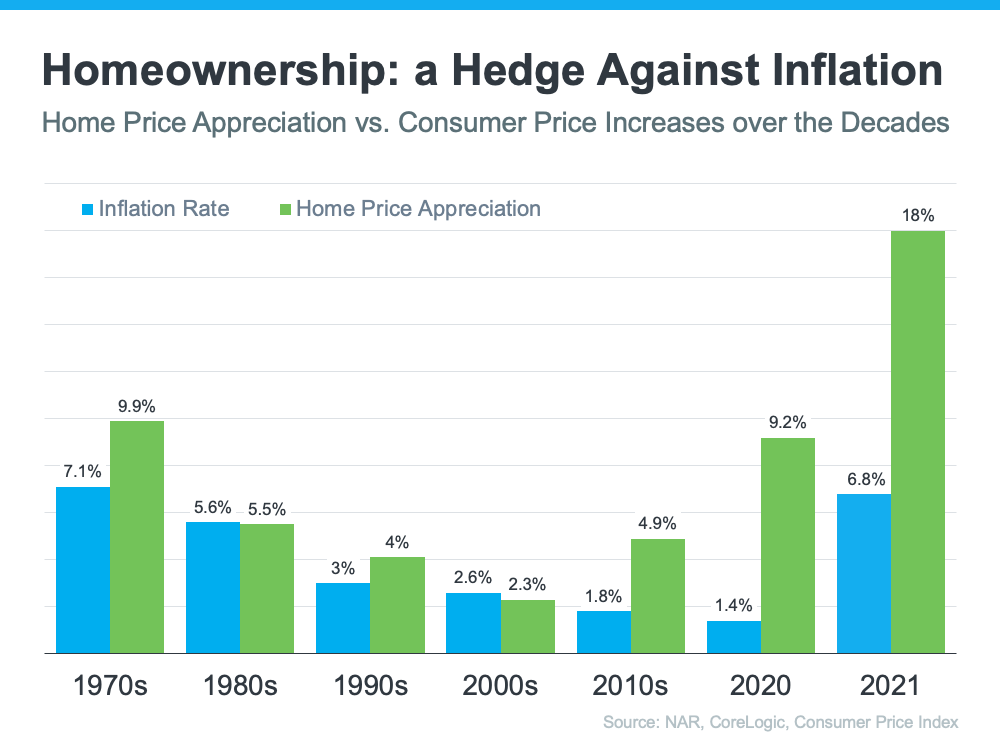
In inflationary times, it’s especially important to invest your money in an asset that traditionally holds or grows in value. The graph below shows how home price appreciation outperformed inflation in most decades going all the way back to the seventies – making homeownership a historically strong hedge against inflation (see graph below):

How Homeownership Can Help Shield You from Inflation | MyKCM

So, what does that mean for you? Today, experts say home prices will only go up from here thanks to the ongoing imbalance in supply and demand. Once you buy a house, any home price appreciation that does occur will be good for your equity and your net worth. And since homes are typically assets that grow in value (even in inflationary times), you have peace of mind that history shows your investment is a strong one.

Bottom Line

If you’re ready to buy a home, it may make sense to move forward with your plans despite rising inflation. If you have questions about your specific situation, let’s connect.

Monday, April 11, 2022

Yes, Yes it is STILL a Sellers' Market


It’s Still a Sellers’ Market [INFOGRAPHIC]

In any market, it's always a question of SUPPLY and DEMAND.

It’s Still a Sellers’ Market [INFOGRAPHIC] | MyKCM

Some Highlights

  • Due to low supply and high demand, today is one of the strongest sellers’ markets we’ve seen.
  • Sellers can benefit from more offers to pick from, higher home values, and a faster sales process. There’s a reason why 72% of people believe it’s a good time to sell.
  • Don’t miss out on this unique opportunity. Let’s connect so you can take advantage of this hot sellers’ market.

Why I Still Think You Should Buy That House, Even Now.

  Invest in Yourself by Owning a Home Are you wondering if it makes sense to buy a home right now? While today’s mortgage rates might seem a...